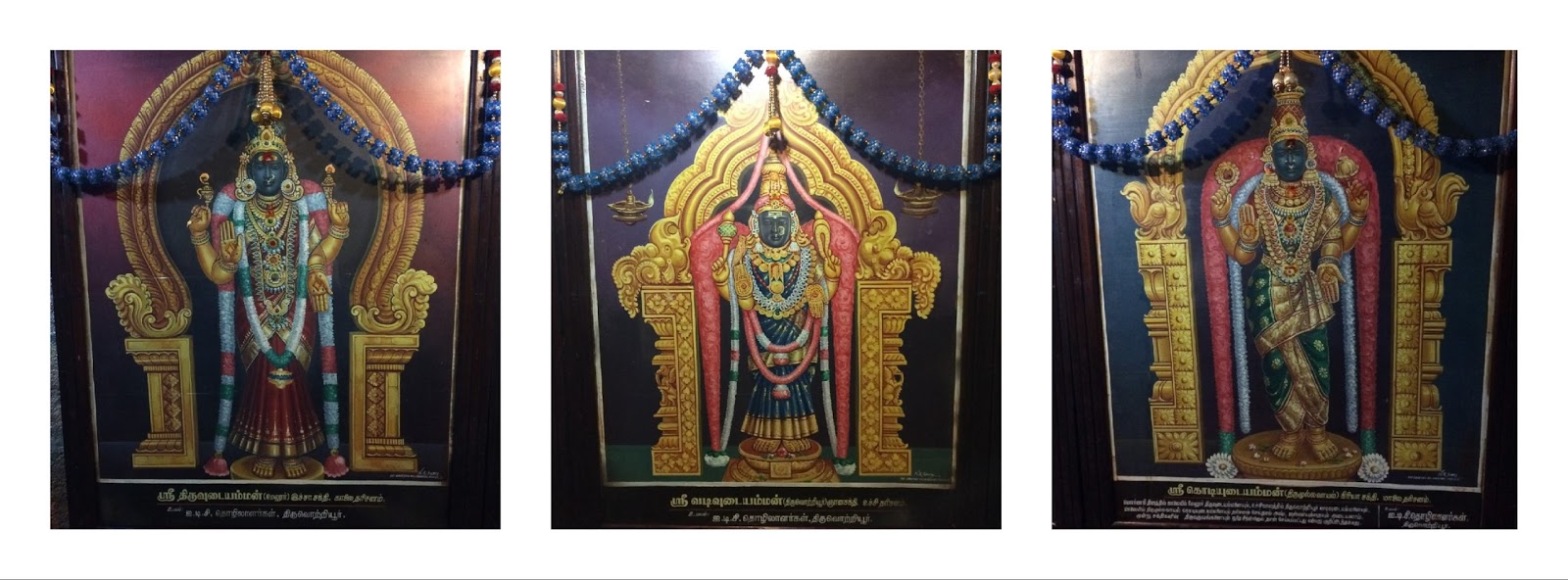
Story of Abhirami Pattar
Subramania Iyer
(aka) Abhirami Pattar (Late 18th Century and Early 19th Century) was a Hindu priest cum saint from a village
called Thirukadayur in Tamilnadu.
He is the author of
a collection of hymns (verses) dedicated to Goddess Abhirami called
"Abhirami Anthadhi" which was spontaneously composed by him on the
spur of the moment with intense devotion and sung in praise of Goddess Abhirami
to invoke her blessings.
Subramania Iyer was
born to Amirthalinga Iyer in the village of Thirukadayur in Tamilnadu in the
Brahmin Agraharam which was established by the famous Maratha King Serfoji
Bhonsle-1 (Sarabhoji Bhonsle-1).
Since his childhood,
Subramania Iyer was drawn to Goddess Abhirami and became an ardent devotee. He
would all the time keep meditating upon the Goddess, singing in praise of the
Goddess, and was fully immersed in utmost devotion. He then started seeing all
the women in the village as Goddess Abhirami and showered flowers on them. As a
result, the people in the village started calling him as a madman.
Raja Serfoji
Bhonsle-1 (Raja Sarabhoji Bhonsle-1)was the King of Thanjavur in Tamilnadu.
(1675- 1728) Raja Serfoji Bhonsle-2
(Raja Sarabhoji Bhonsle-2) ruled Thanjavur from 1798-1832.
King Serfoji
Bhonsle-1 (Sarabhoji Bhonsle-1) not only patronized but also was a great
admirer of Bards in the State of Tamilnadu.
There is a famous
temple dedicated to Lord Shiva in the village of Thirukadayur called
Amirthaghateswarar-Abhirami Temple. In this temple, Lord Shiva is also called
as Mrityunjayar as he had annihilated Lord Yama in order to bless the kid saint
Markandeyan and save him from death. After saving Markandeyan, Lord Shiva gave
punar-janma to Lord Yama to enable him to perform his worldly duties. In this
temple, the male folks in Tamilnadu on reaching the age of 61 years, perform
for themselves "Sashtiabdhapoorti" praying for longevity of their
lives.
One day Raja Serfoji
Bhonsle-1 (Raja Sarabhoji Bhonsle-1) the King of Thanjavur visited the temple
at Thirukadayur. On noticing the peculiar behavior of Subramania Iyer, the King
enquired about him with other temple priests. Some of them told the King that
he was a madman. While others told the King that he was an ardent devotee of
the Goddess Abhirami and a Bard.
Seeking to know the
truth, the King approached Subramania Iyer and asked him what day of the month
(Paksha Thithi) it was? Subramania Iyer replied instantaneously to the King
that it was Pournami (Poornima) Thithi. (Full Moon Day). Whereas in reality, it
was Amavasya Thithi (New Moon Day). Subramania Iyer was in a state of trance at
that moment and was meditating at the glowing face of the Deity Abhirami and
instantly mistook it as Full Moon. (Pournami). The King was annoyed at the
misbehavior and intolerable mistake of
Subramania Iyer and announced the punishment that his head be cut off,
if the moon did not appear in the sky that night.
Subramania Iyer soon
came out of the state of trance he was in and immediately realized his mistake
and lit a huge fire and erected a platform over the fire supported by 100
ropes. He sat upon the platform and started to pray to Goddess Abhirami by
instantly composing and singing the "Abhirami Anthadhi" comprising of 100
hymns (verses). He would cut off one rope after singing one hymn (one verse).
By cutting the ropes one by one after singing each hymn, he was descending into
the fire below the platform.
Subramania Iyer
completed singing 78 hymns (verses) in
succession and cut 78 ropes and was closing in into the fire.
When Subramania Iyer
completed the 79th hymn (verse), a great miracle had happened, Goddess Abhirami
appeared before him and blessed him. Then the Goddess threw her Thadanga (diamond ear ring) on the sky and it
shined as a full moon with bright light on the horizon to the amazement of
people gathered around him.
Subramania Iyer was
in ecstasy and was overwhelmed, he
offered his prostration to the Goddess and continued to compose and sing 22
more hymns (verses) in praise of Goddess Abhirami.
The King repented
his mistake in imposing death penalty on Subramania Iyer and immediately
withdrew the same. The King then bestowed the title "Abhirami Pattar" on Subramania Iyer.
Significance of Abhirami
Anthadhi
Abhirami Anthadhi is
a brilliant piece of modern Tamil literature.
It contains 100 hymns (verses).
The term "Anthadhi" refers to the particular
style of composition wherein each new hymn (verse) begins with the same word
that was used in the end of the previous hymn (verse)
After reciting the
79th hymn (verse), the Goddess Abhirami appeared before Subramania Iyer.
In the Tamil film
"Adhiparasakthi", 24th hymn (verse) was chosen to show the appearance
of the Goddess Abhirami in the film. But in reality it was the 79th hymn
(verse) which triggered the appearance of Goddess Abhirami before Subramania
Iyer.
In Thirukadayur
temple, every year on the Thai Amavasya day ( New Moon Day in January) is
celebrated as the day on which Goddess Abhirami appeared before Abhirami
Pattar. All the 100 hymns (verses) are recited before Goddess Abhirami on that
day in the Pooja performed in the night.
I dedicate this
blog to my wife who recently turned 50, and whose native place is Thirukadayur.
79: ро╡ிро┤ிроХ்роХே роЕро░ுро│் роЙрог்роЯு, роЕрокிро░ாроо ро╡ро▓்ро▓ிроХ்роХு, ро╡ேродроо் роЪொрой்рой
ро╡ро┤ிроХ்роХே ро╡ро┤ிрокроЯ роиெроЮ்роЪு роЙрог்роЯு роОроороХ்роХு, роЕро╡்ро╡ро┤ி роХிроЯроХ்роХ,
рокро┤ிроХ்роХே роЪுро┤рой்ро▒ு, ро╡ெроо் рокாро╡роЩ்роХро│ே роЪெроп்родு, рокாро┤் роиро░роХроХ்
роХுро┤ிроХ்роХே роЕро┤ுрои்родுроо் роХропро╡ро░் родроо்рооோроЯு, роОрой்рой роХூроЯ்роЯு роЗройிропே?
роЕрокிро░ாрооிропிрой் ро╡ிро┤ிроХро│ிро▓் роОрой்ро▒ுроо் роЕро░ுро│ுрог்роЯு. ро╡ேродрооுро▒ைрок்рокроЯி роЕро╡ро│ை ро╡ро┤ிрокроЯ роОройроХ்роХு роиெроЮ்роЪрооுроо் роЙрог்роЯு. роЖроХைропாро▓் рокро┤ிропைропுроо், рокாро╡род்родைропுрооே ро╡ிро│ைро╡ிрод்родு, рокாро┤் роиро░роХроХ்роХுро┤ிропிро▓் роЕро┤ுрои்родி ро╡ாроЯுроо் рокேродைропро░்роХро│ோроЯு роОройроХ்роХு роЗройி роОрой்рой родொроЯро░்рокு? (роЕрокிро░ாрооி роЕрой்ройை роЪிро▒рои்род родுрогைропாро╡ாро│்).
24: роорогிропே, роорогிропிрой் роТро│ிропே, роТро│ிро░ுроо் роорогி рокுройைрои்род
роЕрогிропே, роЕрогிропுроо் роЕрогிроХ்роХு роЕро┤роХே, роЕрогுроХாродро╡ро░்роХ்роХுрок்
рокிрогிропே, рокிрогிроХ்роХு рооро░ுрои்родே, роЕрооро░ро░் рокெро░ு ро╡ிро░ுрои்родே.-
рокрогிропேрой், роТро░ுро╡ро░ை роиிрой் рокрод்роо рокாродроо் рокрогிрои்родрокிрой்ройே.
роЕрокிро░ாрооிрод்родாропே! роорогிропாроХ ро╡ிро│роЩ்роХுрокро╡ро│ே! роЕроо் роорогிропிро▓் роЙрог்роЯாроХுроо் роТро│ிропாроХро╡ுроо் ро╡ிро│роЩ்роХுрокро╡ро│ே! роТро│ி рокொро░ுрои்родிроп роиро╡роорогிроХро│ாро▓் роЗро┤ைроХ்роХрок்рокроЯ்роЯ роЕрогிропாроХро╡ுроо், роЕрои்род роЕрогிроХ்роХு роЕро┤роХாроХро╡ுроо் родிроХро┤்рокро╡ро│ே! роиிрой்ройை роЕрогுроХாродро╡ро░்роХ்роХுрок் рокிрогிропெрой роиிро▒்рокро╡ро│ே! роиிрой்ройை роЕрог்роЯிро╡ро░ுроо் рокாрокாрод்родுрооாроХ்роХро│ிрой் рокிрогிроХ்роХு рооро░ுрои்родாроХро╡ுроо் роиிро▒்рокро╡ро│ே! родேро╡ро░்роХро│ுроХ்роХு рокெро░ுроо் ро╡ிро░ுрои்родாроп்род் родோрой்ро▒ுроо் роЕрой்ройைропே! роиிрой் роЕро┤роХிроп родாрооро░ை рокோро▓ுро│்ро│ роЪேро╡роЯிропைрок் рокрогிрои்род рокிрой்ройே, ро╡ேро▒ொро░ு родெроп்ро╡род்родை ро╡рогроЩ்роХ рооройрод்родாро▓ுроо் роиிройைропேрой்.
роиூро▒்рокропрой்
роЖрод்родாро│ை, роОроЩ்роХро│் роЕрокிро░ாроо ро╡ро▓்ро▓ிропை, роЕрог்роЯроо் роОро▓்ро▓ாроо்
рокூрод்родாро│ை, рооாродுро│роо் рокூ роиிро▒род்родாро│ை, рокுро╡ி роЕроЯроЩ்роХроХ்
роХாрод்родாро│ை, роРроЩ்роХрогைрок் рокாроЪроЩ்роХுроЪрооுроо் роХро░ுрок்рокுро╡ிро▓்ро▓ுроо்
роЪேро░்род்родாро│ை, рооுроХ்роХрог்рогிропைрод், родொро┤ுро╡ாро░்роХ்роХு роТро░ு родீроЩ்роХு роЗро▓்ро▓ைропே.
роОроЩ்роХро│் родாропாройро╡ро│ை, роЕрокிро░ாрооி ро╡ро▓்ро▓ிропை, роОро▓்ро▓ா роЙро▓роХроЩ்роХро│ைропுроо் рокெро▒்ро▒ро╡ро│ை, рооாродுро│роо் рокூрок்рокோрой்ро▒ роиிро▒род்родுроЯைропро╡ро│ை, роЙро▓роХрооெро▓்ро▓ாроо் роХாрод்родро╡ро│ை, родிро░ுроХ்роХро░роЩ்роХро│ிро▓் рооро▓ро░் роЕроо்рокுроХро│் роРрои்родைропுроо், рокாроЪрод்родைропுроо், роЕроЩ்роХுроЪрод்родைропுроо், роХро░ுроо்рокு ро╡ிро▓்ро▓ைропுроо் ро╡ைрод்родிро░ுрокро╡ро│ை, рооூрой்ро▒ு роХрог்роХро│ைропுроЯைроп родேро╡ிропைрод் родொро┤ுро╡ாро░்роХ்роХு роТро░ு родீроЩ்роХுроо் роиேро░ாродு; роЙро▓роХிро▓் ро╡ро│рооுроо் роиро▓рооுроо் рокெро▒்ро▒ு ро╡ாро┤்ро╡ро░்.